
1/6
Cosmos Digest: 5 space stories to know this week
2026/6/18 · 7:41
ギャラリー
A quick visual tour through the latest space-science signals: a planet getting roasted, a fossil fragment of the Milky Way, strange X-rays after stellar explosions, a very early flickering quasar, and a star-forming cloud caught in infrared.
Slide 1 — This week at a glance
Use the cover as your map: one week, five stories, one question for each: what did we learn that changes how we picture the universe?
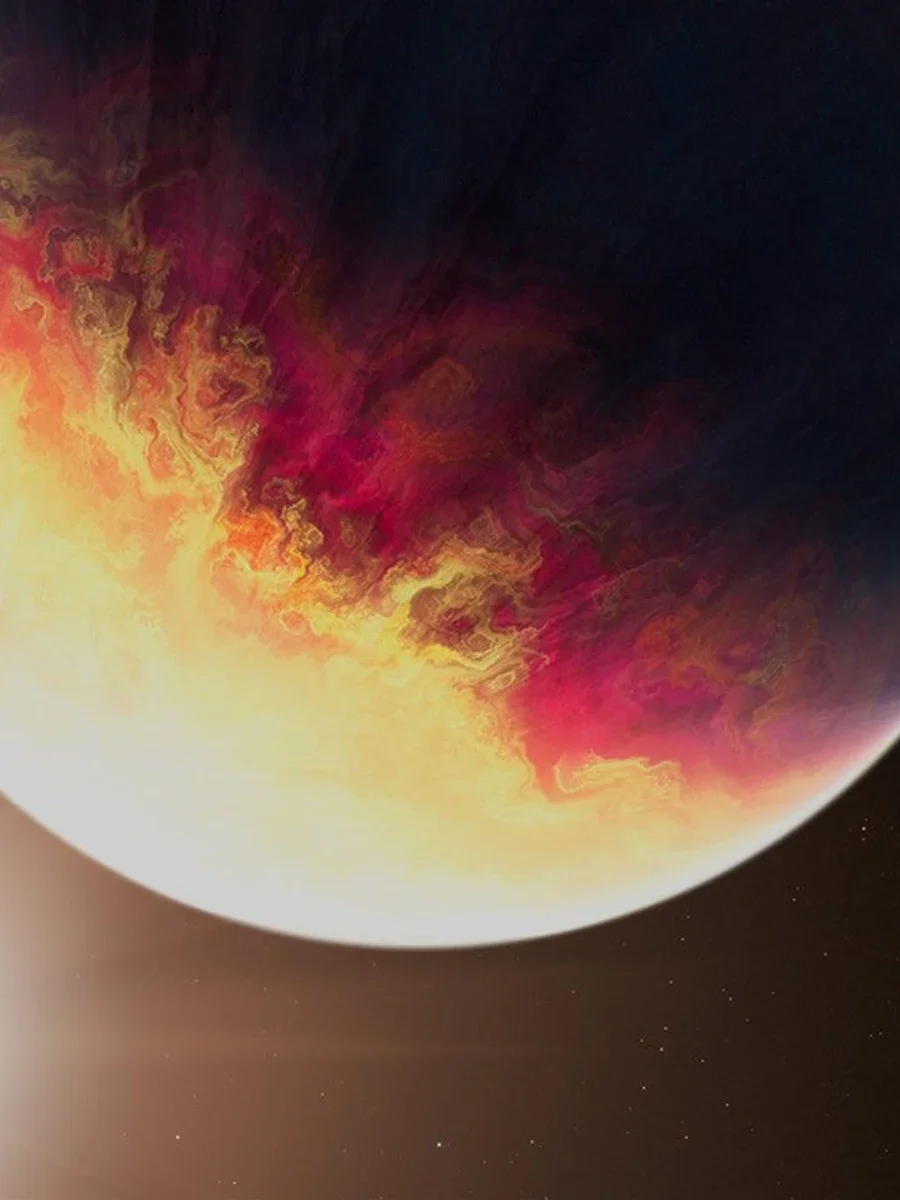
Slide 2 — Webb watched an exoplanet heat up in real time
What happened: NASA reported that Webb used MIRI to observe HD 80606 b, a gas giant about four times Jupiter's mass, around the point where its highly stretched 111-day orbit brings it closest to its star. The planet's atmosphere warmed by about 1,100°F during the event, while Webb's spectroscopy tracked chemical clues such as methane and carbon dioxide. 1
Why it matters: Most exoplanet atmospheres are snapshots. This is closer to weather watching on an alien world: heat arrives fast, chemistry shifts, clouds can change, and scientists can test models against a real before-and-after sequence.
Takeaway: Extreme planets are laboratories for atmosphere physics.
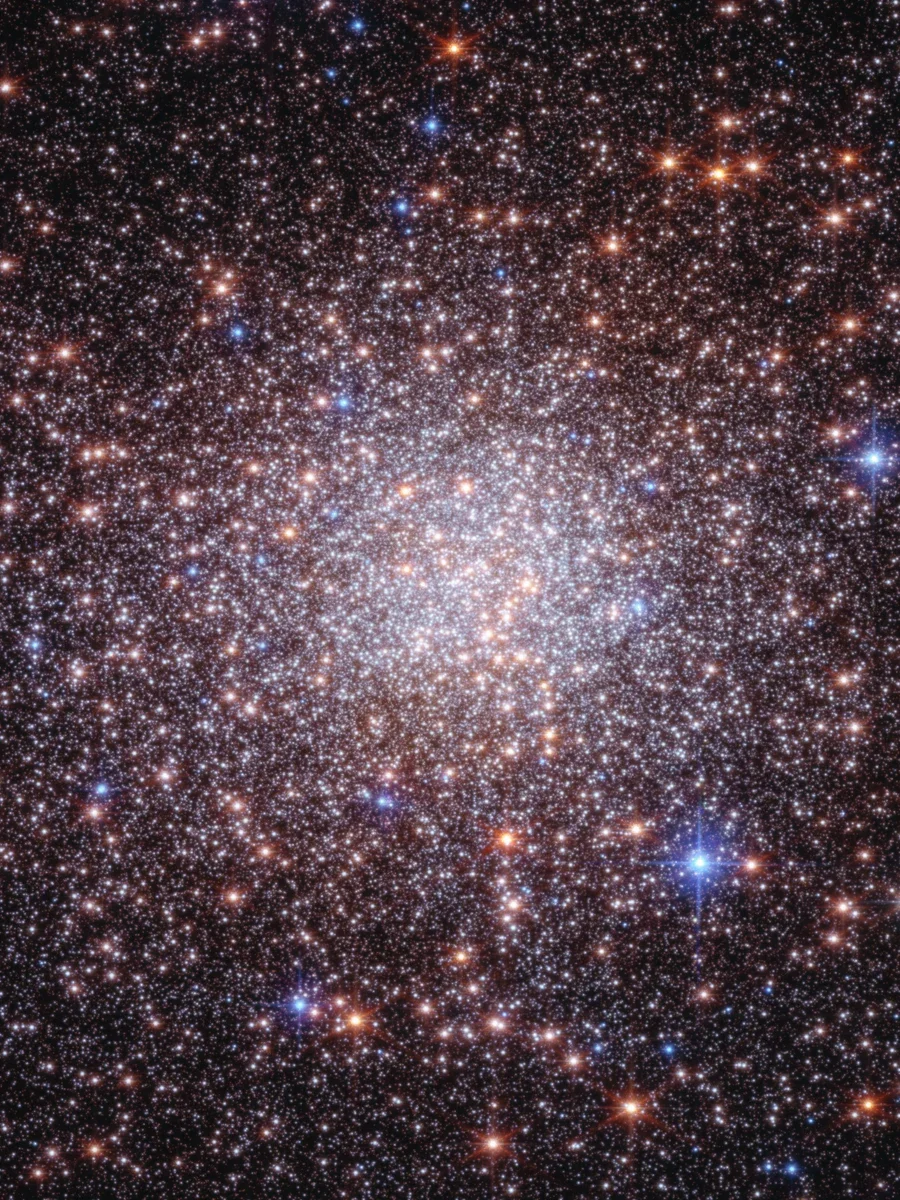
Slide 3 — A Milky Way relic is not what it first looked like
What happened: ESA described Webb and Hubble work showing that Terzan 5 is best understood as the prototype of a new class called a "bulge fossil fragment" rather than a normal globular cluster. It contains multiple stellar generations, including populations dated to roughly 12.5, 4.7, 3.8, and 2.5 billion years ago. 2
Why it matters: The Milky Way's central bulge is hard to reconstruct because its early history is packed together and dusty. Terzan 5 acts like a fossil sample from that region, preserving several bursts of star formation.
Takeaway: Some star clusters are better read as pieces of galaxy history.
Slide 4 — Chandra found unexpected fireworks after supernovae
What happened: NASA's Chandra team reported that 14 years of X-ray data on galaxy M83, about 15 million light-years away, revealed 22 X-ray sources associated with supernova remnants. Roughly half varied strongly in brightness, a pattern likely linked to high-mass X-ray binaries where a surviving companion feeds a neutron star or black hole. 3
Why it matters: These systems used to look rare. Finding more than twenty strong candidates in one galaxy suggests they may be common in busy star-forming galaxies, changing how astronomers count the afterlives of massive stars.
Takeaway: A supernova can be the start of a long, messy X-ray story.
Slide 5 — The earliest known flickering quasar raises a black-hole puzzle
What happened: MIT reported the earliest known flickering quasar, seen when the universe was about 850 million years old. The quasar shines at around 12 trillion Suns and fluctuates by about 2 trillion Suns, based on 14 years of reprocessed NASA NEOWISE infrared data. 4 5
Why it matters: Flickering can reveal the structure of the hot disk feeding a supermassive black hole. Seeing that behavior so early suggests mature disk physics was already in place near cosmic dawn, which sharpens the question of how giant black holes grew so quickly.
Takeaway: The early universe was already building surprisingly organized engines.
Slide 6 — Webb traced young stars across one cloud
What happened: ESA released a Webb image of OMC-2 in the Orion Molecular Cloud, about 1,280 light-years away. The view covers a wide northern portion of the region and captures objects across stages of star formation, from protostars to protoplanetary discs and pre-main-sequence stars. 6
Why it matters: Infrared light lets Webb look through dust that blocks visible-light telescopes. That makes the same cloud useful for studying outflows, chemistry under ultraviolet light, and how gas and dust build future planetary systems.
Takeaway: Star birth is not one moment; it is a sequence, and Webb can put several stages in the same frame.
Source and image notes: Official NASA/ESA visuals are used for the exoplanet, Terzan 5, M83, and OMC-2 slides. The cover and quasar explainer card are generated editorial graphics based on the cited reporting and paper.
参考ソース
- 1NASA's Webb Catches Exoplanet Getting Roasted
- 2Webb, Hubble reveal relic of our galaxy's formation
- 3NASA's Chandra Finds Unexpected Fireworks in Aftermath of Stellar Explosions
- 4MIT astronomers discover earliest known flickering quasar
- 5Nature Astronomy: Cosmic dawn quasar variability
- 6Webb unveils young stars across every stage of formation
コメント